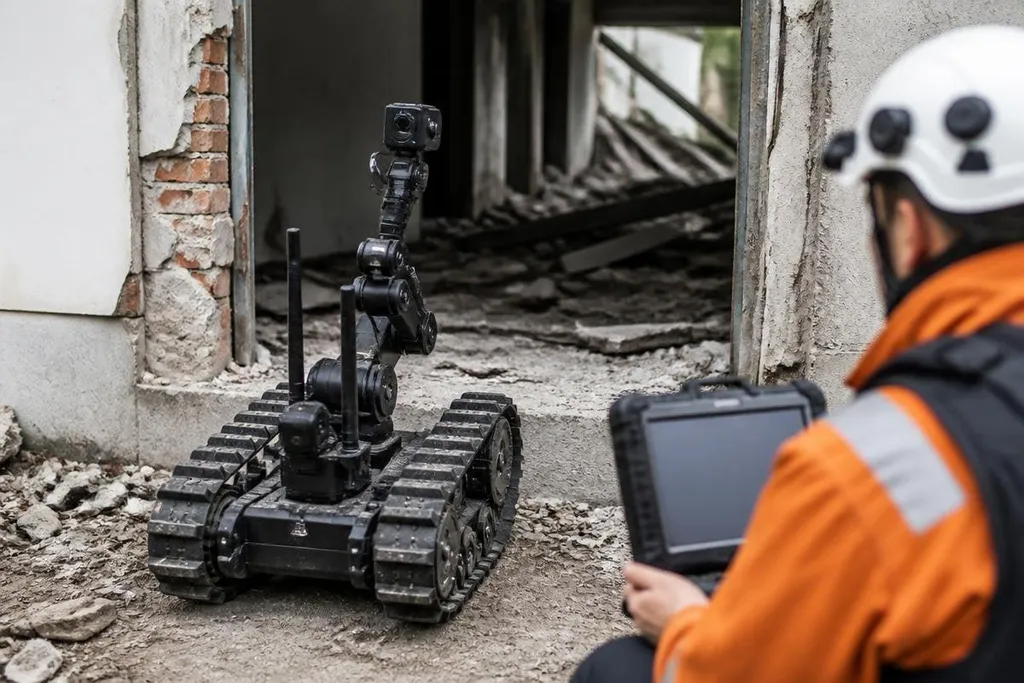
A disaster robot may enter a damaged building before a responder can safely cross the doorway. AI helps that robot sort sensor data, spot hazards, and choose its next move when maps and radio links are incomplete.
The useful question for an emergency team is narrower: what work can AI take on, and where must a person still decide?
- AI can combine camera, thermal, LiDAR, and gas-sensor data into one view.
- A robot can build a map while moving through a damaged site.
- Human control remains important when lives, unstable structures, or unclear objects are involved.
How AI reads a damaged site
A disaster scene gives a robot poor working conditions. Dust can block a camera. Smoke can hide a doorway. Rubble can change the route from one minute to the next.
AI helps by comparing several sensor feeds instead of relying on one image. A visible-light camera may show a broken wall, while a thermal camera can show heat behind smoke. LiDAR measures distance with laser pulses, helping the robot estimate the shape of a room. A gas sensor adds another warning when air may be unsafe for people.
The robot's software must then decide which readings belong together. This process helps create a map and mark objects such as doors, gaps, people, and damaged floors. The map may remain incomplete, but even an approximate layout can help an operator pick a safer route.
Movement when the map keeps changing
Many disaster robots use simultaneous localization and mapping, or SLAM. The term describes a robot finding its position while it builds a map. AI can help match new sensor readings with earlier readings, so the robot can tell a real wall from a loose sheet of metal.
That task gets harder when the robot climbs over rubble or loses a clear view of its surroundings. Tracks can slip. A leg can sink. A drone can lose its position in a dark room. The software needs a safe fallback, such as stopping, reversing, or asking a person to take control.
This is where the difference between a demo and emergency work becomes plain. A robot that moves well across a known floor may need a different control system when the floor breaks apart under it.
Finding people and hazards
AI can sort images and sensor readings for signs of a person, a fire, a leak, or a blocked passage. That can reduce the time an operator spends scanning an empty section of a site. It can also mark areas for a responder to check in person.
A detection is not proof. A warm pipe can look like a person on a thermal camera. A coat may look like a body under dust. The system should show the image, sensor reading, and location so a trained operator can check the alert.
A useful report names the robot, sensor setup, test site, and operator role behind each alert. Robot24.com emergency robotics reports can put those details beside the AI claim before the next section looks at where human judgment stays in charge.
Where AI still needs a person
An autonomous system can handle a narrow task, such as keeping a safe distance from a wall or returning to a known point. It should not decide alone whether a trapped person can be reached through an unstable structure.
Radio links may fail behind concrete. Batteries may run low before the search ends. A robot may also misread a scene that differs from the data used to train its software. These limits make remote operation, clear alerts, and a safe stop command part of the system, not optional extras.
I’d choose a robot with slower movement and clear operator control over one that moves faster but hides its uncertainty.
A field check before purchase
Use these questions when comparing a disaster robot for a response team:
- Sensor mix: Does it carry the cameras and sensors needed for smoke, heat, distance, or gas?
- Map failure: What does the robot do when SLAM loses its position?
- Operator link: Can a person take control, and does the robot show signal loss clearly?
- Search record: Does the system save images, sensor readings, and locations for later review?
- Power plan: Can the team swap or recharge the battery at the work site?
- Safe stop: Can an operator stop the motors quickly from the control station?
The next useful test is not a clean obstacle course. It is a marked search area with dust, blocked radio paths, changing routes, and a known number of objects to find. Until a robot handles that test with clear records and safe failure behavior, its AI belongs in support of responders, not in charge of them.